Oral & Maxillofacial Surgery

Orthognathic Surgery

Corrective jaw surgery for skeletal deformities, facial asymmetry, and bite misalignment — restoring function, facial balance, and confidence.

Overview

What Is Orthognathic Surgery?


Orthognathic surgery — also called corrective jaw surgery — is the surgical repositioning of the upper jaw (maxilla), lower jaw (mandible), or both, to correct skeletal discrepancies that cannot be fully corrected by orthodontic treatment alone. The word "orthognathic" literally means "straight jaws."

When the size or position of the jaw bones is the underlying cause of a bite problem or facial imbalance — rather than just the position of the teeth — surgery on the bones themselves is the only effective solution. Braces can move teeth, but they cannot move bones. Orthognathic surgery moves the jaw bones into a corrected position and holds them there with small titanium plates and screws while the bone heals in its new location.

Orthognathic surgery is typically planned and performed in close coordination between Dr. Chatterjee (the maxillofacial surgeon) and the patient's orthodontist, with orthodontic treatment performed before and after the surgical procedure to achieve the optimal result.

12–18 months Pre-surgical orthodontic preparation
6 weeks Soft diet recovery period
Conditions Treated

Skeletal Jaw Conditions We Correct

Orthognathic surgery addresses skeletal jaw discrepancies — conditions where the bones themselves, not just the teeth, are in an incorrect position.

Underbite / Mandibular Prognathism

The lower jaw protrudes beyond the upper jaw, causing the lower teeth to sit in front of the upper teeth. This skeletal discrepancy cannot be corrected by orthodontics alone and requires surgical repositioning of the mandible (lower jaw) through a bilateral sagittal split osteotomy (BSSO) to set it back into correct alignment.

Overbite / Maxillary Deficiency

The upper jaw is set back relative to the lower jaw, or the upper jaw is underdeveloped, resulting in a receding chin profile, dental crowding, and a convex facial profile. Surgical correction involves advancing the maxilla with a LeFort I osteotomy, sometimes combined with mandibular surgery for optimal results.

Open Bite

A gap between the upper and lower teeth when the back teeth are biting together — the front teeth do not meet. Open bite may be dental or skeletal in origin. Skeletal anterior open bite requires surgical correction involving repositioning of both the maxilla and mandible to close the vertical gap and establish a normal bite relationship.

Facial Asymmetry

Significant asymmetry in facial structure — where one side of the face appears visibly different from the other — may result from uneven jaw growth, condylar hyperplasia, or hemifacial microsomia. Orthognathic surgery repositions the jaws to create balance, often combined with genioplasty (chin surgery) to optimise facial symmetry.

Sleep Apnoea-Related Jaw Issues

In patients with obstructive sleep apnoea (OSA) caused by a retrognathic (set-back) lower jaw, maxillomandibular advancement — surgically moving both jaws forward — significantly enlarges the airway behind the tongue and palate. This is one of the most effective surgical treatments for moderate-to-severe OSA in appropriately selected patients.

The Treatment Process

The Orthognathic Treatment Journey

Orthognathic treatment is a coordinated process between surgeon and orthodontist. Understanding each phase helps patients prepare for the full journey to their final result.

Orthodontic Preparation

Braces are placed to align the teeth within each jaw (without compensating for the jaw discrepancy). This "decompensation" phase typically takes 12–18 months and ensures the teeth will fit correctly after the bones are repositioned. Pre-surgical orthodontic preparation is essential for a predictable outcome.

Surgical Planning

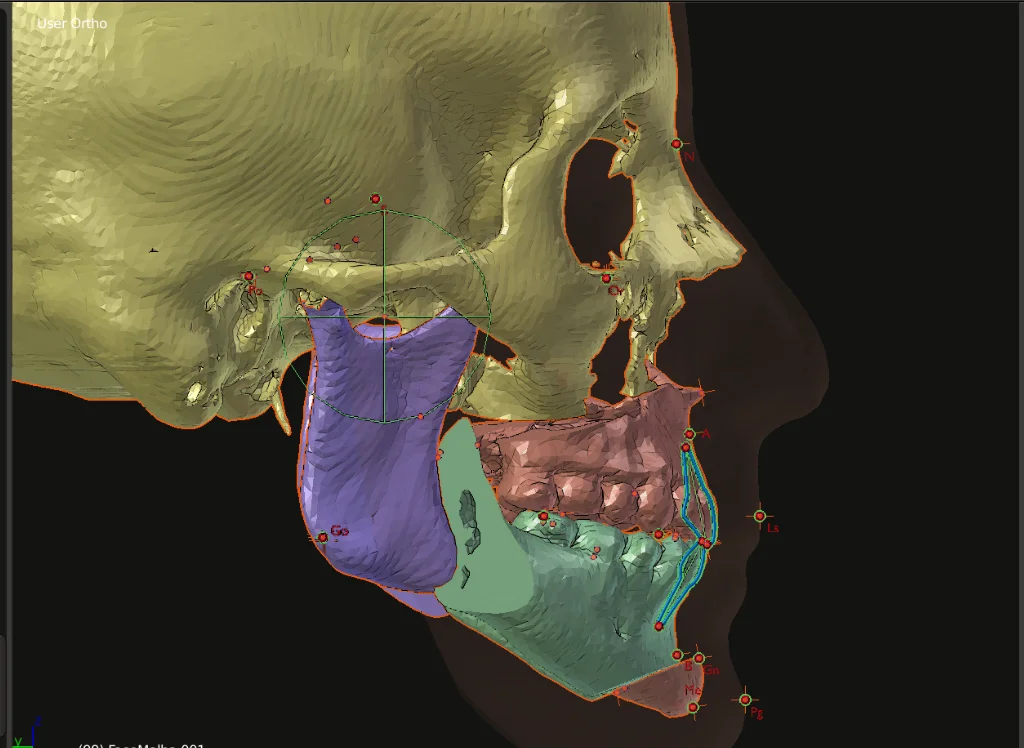
3D CT scanning and digital treatment planning using computer-aided surgical simulation (CASS) allow precise virtual repositioning of the jaws before surgery. Custom surgical guides (wafers/splints) are fabricated to achieve the planned jaw positions accurately in the operating theatre. A mock surgery on digital models confirms the planned movements.

Surgery

Performed under general anaesthesia, typically lasting 2–4 hours. The jaw bones are cut (osteotomy) and repositioned using the planned movements. Titanium plates and screws (fixation) hold the bones in the new position while healing occurs. All incisions are made inside the mouth, leaving no visible external scars.

Recovery

Hospital stay of 2–3 days. A liquid and soft diet is maintained for 6 weeks while bone healing occurs. Swelling gradually resolves over 4–8 weeks. Most patients return to work or school within 3–4 weeks. Normal diet typically resumes at 6–8 weeks post-surgery.

Orthodontic Finishing

After bone healing is confirmed (typically 6–8 weeks post-surgery), orthodontic refinement continues to achieve the final bite alignment and optimal occlusion. Post-surgical orthodontics typically takes 6–12 months before the braces are removed and retainers are fitted to maintain the result.

Surgical Procedures

Types of Orthognathic Procedures

Procedures are selected and combined based on which jaw or jaws need repositioning and in which direction.

LeFort I Osteotomy

A surgical cut through the maxilla (upper jaw) at the level of the upper teeth roots, allowing the entire upper jaw to be moved as a single unit — forward, backward, upward, downward, or rotated to correct facial imbalance. The most commonly performed upper jaw osteotomy. All incisions are inside the mouth.

Bilateral Sagittal Split Osteotomy (BSSO)

The definitive lower jaw surgery. Cuts are made through the ramus (vertical part) of the mandible on both sides, splitting the bone in a way that allows the tooth-bearing front segment to be moved forward, backward, rotated, or a combination — while maintaining large bony contact surfaces that heal reliably and are stabilised with titanium plates and screws.

Genioplasty (Chin Surgery)

A procedure that detaches the chin bone (mental symphysis) and repositions it in three dimensions — forward, backward, upward, or downward, or asymmetrically corrected. Genioplasty is frequently performed at the same time as BSSO or bimaxillary surgery to optimise the chin position and overall facial profile.

Combined Treatment with Your Orthodontist

Orthognathic surgery requires coordinated planning and treatment between the maxillofacial surgeon and the patient's orthodontist. Pre-surgical orthodontic preparation — typically 12–18 months of braces — aligns the teeth within each jaw in preparation for surgical repositioning. If you are already under orthodontic care and your orthodontist has recommended surgical assessment, or if you have been told your bite problem cannot be corrected with braces alone, Dr. Chatterjee welcomes direct referrals from orthodontists and provides combined treatment planning consultations.

If you do not yet have an orthodontist, Dr. Chatterjee can refer you to an appropriate orthodontic colleague for pre-surgical treatment coordination.

Aftercare

Recovery & Results


Immediately Post-Op (Days 1–7)

Hospital stay of 2–3 days. Significant facial swelling and bruising — this is normal and expected. Liquid diet through a syringe or straw as directed. Prescribed pain relief and antibiotics. Chin and lip numbness is common and typically resolves with time.

Weeks 1–6: Healing Phase

Soft diet maintained strictly. Swelling reduces progressively — most visible swelling resolves by week 4–6. Return to light activities and work typically possible at 3–4 weeks. Avoid contact sports and strenuous activities until bone healing is confirmed at 6 weeks.

Months 2–6: Post-Surgical Orthodontics

Once bone healing is confirmed at 6–8 weeks, orthodontic treatment resumes with post-surgical refinement. The orthodontist fine-tunes the bite to achieve optimal occlusion. Residual facial swelling continues to resolve slowly — the full result is visible at 3–6 months.

Final Result (12–18 Months)

Braces removed and retainers fitted once orthodontic finishing is complete. The patient experiences the full functional and aesthetic result of treatment: improved bite, improved chewing efficiency, and enhanced facial balance. Long-term stability is excellent with properly executed surgery and post-surgical orthodontic finishing.

Why Specialist Care Matters

Why the Surgeon's Experience Matters in Orthognathic Surgery

MDS Surgical Training

Orthognathic surgery is a core competency of the MDS Oral & Maxillofacial Surgery programme. Dr. Chatterjee has dedicated training in LeFort osteotomy, BSSO, and genioplasty.

Precise Pre-operative Planning

Surgical planning using digital cephalometric analysis and 3D CT-based simulation ensures accurate, predictable jaw movements and minimises the risk of relapse.

Orthodontist Coordination

Effective communication with the patient's orthodontist ensures the pre-surgical dental preparation is complete before surgery, and post-surgical refinement achieves the planned result.

Specialist Access in Birbhum

Orthognathic surgery expertise available in Rampurhat — patients from Birbhum and surrounding districts no longer need to travel to Kolkata for corrective jaw surgery consultation and treatment.

Common Questions

Orthognathic Surgery FAQs

Bite Problem or Jaw Imbalance? Find Out If Surgery Can Help

Book a consultation with Dr. Abhisek Chatterjee to assess whether orthognathic surgery is the right solution for your jaw discrepancy, facial asymmetry, or bite problem.