Head & Neck Oncological Surgery

Tongue Cancer Surgery

Surgical treatment of tongue cancer — glossectomy with free flap reconstruction to restore speech, swallowing, and quality of life after oral cancer surgery.

Overview

What Is Tongue Cancer Surgery?


Tongue cancer surgery (glossectomy) is the surgical removal of part or all of the tongue to treat squamous cell carcinoma (OSCC) — the most common type of tongue cancer. In India, tongue cancer is among the most frequently encountered oral cancers, strongly associated with tobacco chewing, areca nut (betel nut) use, alcohol, and — particularly for base of tongue cancers — human papillomavirus (HPV) infection.

The tongue plays a critical role in eating, speaking, and swallowing. For this reason, tongue cancer surgery must achieve two equally important goals: complete oncological clearance with adequate surgical margins, and preservation or reconstruction of enough tongue function to allow the patient to eat and communicate after surgery.

Dr. Abhisek Chatterjee performs the full spectrum of tongue cancer surgery — from conservative partial glossectomy for early-stage tumours to total glossectomy with free flap reconstruction for advanced disease — at Asha Cancer Institute, Rampurhat.

Asha Cancer Institute, Rampurhat
Resection + reconstruction in same procedure
Confirmed Diagnosis

When Is Tongue Cancer Surgery Indicated?


Tongue cancer surgery is indicated when histopathological examination (biopsy) confirms squamous cell carcinoma of the oral tongue (mobile tongue) or base of tongue. The decision to proceed with surgery — and the extent of surgery — is based on:

  • Confirmed squamous cell carcinoma (OSCC) on incisional biopsy histopathology
  • Clinical and radiological staging (clinical examination + CT or MRI of the neck)
  • Tumour size and depth of invasion (depth of invasion >4 mm is a key predictor of nodal metastasis)
  • Proximity to the midline (involvement of the midline affects the extent of resection and reconstruction needed)
  • Patient's general fitness for general anaesthesia and major surgery
  • Patient's preference and understanding of the functional implications of surgery
Types of Procedure

Types of Tongue Cancer Surgery (Glossectomy)

The extent of tongue removal is determined by the tumour's size, position, and depth — balancing oncological completeness with functional preservation.

Partial Glossectomy

For Early Stage Tongue Cancer (T1–T2)

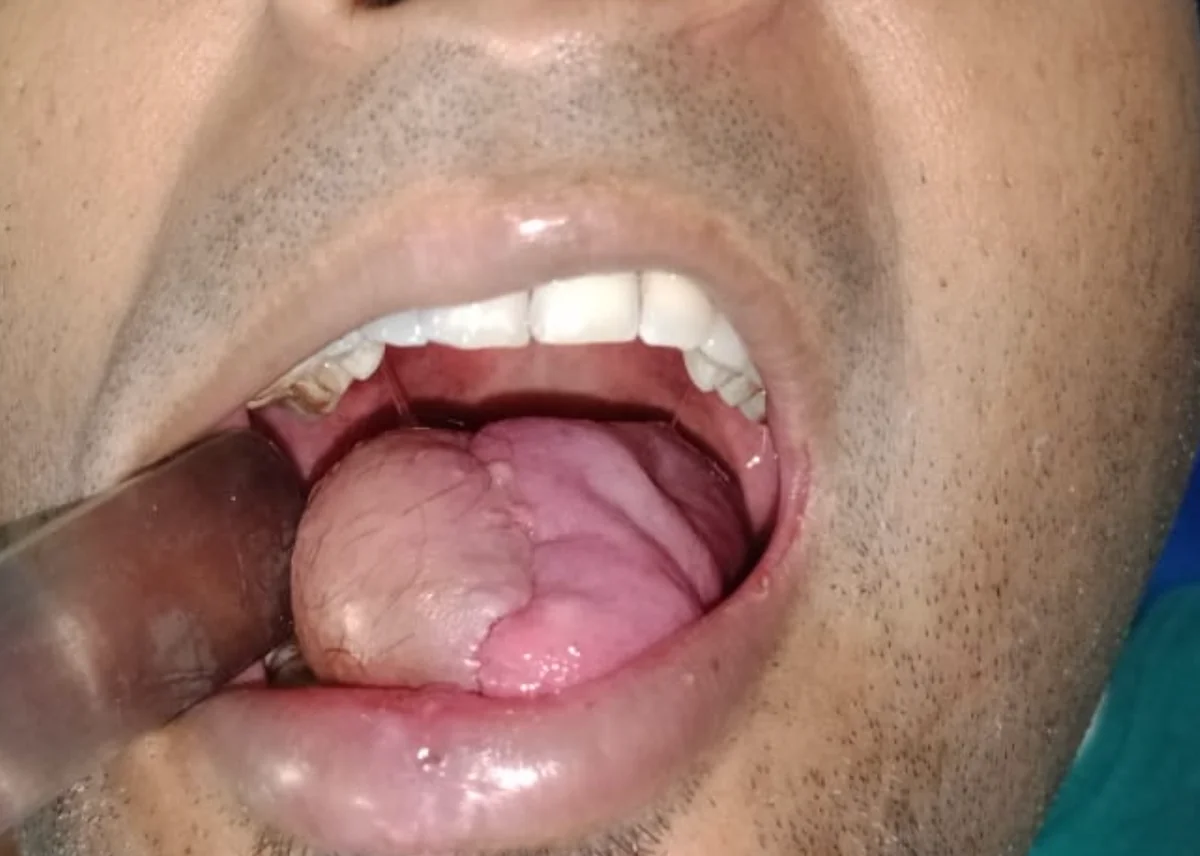
Removal of a segment of the tongue — typically one lateral border or the anterior tongue — with adequate surgical margins around the tumour. Suitable for smaller tumours (less than 4 cm) confined to the mobile tongue. When the defect is small enough, direct closure or a local flap provides adequate reconstruction. Larger partial glossectomy defects require free flap reconstruction (radial forearm flap or ALT flap) to restore tongue volume and mobility.

Hemiglossectomy

For Larger or Mid-Stage Tumours (T2–T3)

Removal of approximately half of the tongue — typically the involved lateral half. Hemiglossectomy is appropriate when the tumour involves a substantial portion of one side of the mobile tongue. Free flap reconstruction with a radial forearm flap (for thin, supple intraoral lining) or ALT flap is performed simultaneously to restore tongue bulk and maintain speech and swallowing function.

Total Glossectomy

For Advanced Tongue Cancer (T3–T4)

Removal of the entire mobile tongue, and in some cases the base of tongue as well (total glossectomy with laryngeal preservation, or glossolaryngectomy). This is required for large tumours involving the full extent of the tongue. Reconstruction with a large ALT (anterolateral thigh) free flap attempts to restore a functional neotongue. Total glossectomy patients require intensive speech and swallowing rehabilitation, and some will depend on enteral feeding long-term.

Neck Dissection as Part of Tongue Cancer Surgery

Neck dissection — surgical removal of the lymph nodes in the neck — is a standard component of tongue cancer surgery in most cases. Tongue squamous cell carcinoma has a high propensity for regional lymph node metastasis, even at early clinical stages. The risk of occult (microscopic) nodal disease in clinically N0 (apparently node-negative) tongue cancer is significant enough that elective neck dissection of the ipsilateral neck (and often bilateral) is recommended by most guidelines for tumours with depth of invasion greater than 4 mm.

When neck nodes are clinically or radiologically positive, therapeutic neck dissection is performed. Selective neck dissection targeting the relevant lymph node levels (I–III or I–IV for oral tongue cancers) provides pathological staging information that guides post-operative adjuvant treatment decisions.

Tongue Reconstruction

Reconstruction: Restoring Tongue Function

Reconstruction is planned simultaneously with tongue resection to restore volume, mobility, and function — enabling swallowing and speech rehabilitation after surgery.

Radial Forearm Free Flap

The radial forearm flap (thin, pliable fasciocutaneous flap from the forearm based on the radial artery) is the preferred reconstruction for partial glossectomy defects where the priority is a thin, mobile flap that conforms to the oral cavity and allows remaining tongue tissue to function. Minimal bulk allows the residual tongue to move freely for speech articulation and swallowing.

Anterolateral Thigh (ALT) Free Flap

The ALT flap (large fasciocutaneous or musculocutaneous flap from the thigh) provides greater tissue volume — making it ideal for larger glossectomy defects, hemiglossectomy, or total glossectomy reconstruction. It can be harvested with a large skin paddle and can be thinned for intraoral use. The ALT provides a neotongue bulk that helps maintain a functional floor of mouth and assists in swallowing.

Recovery

Recovery: Speech, Swallowing & Diet


Speech

Speech is significantly affected immediately after surgery — particularly after hemiglossectomy or total glossectomy. Speech therapy begins post-operatively to maximise articulation with the residual and reconstructed tongue. Many patients after partial glossectomy achieve near-normal speech. After larger resections, compensatory articulation strategies and the flap bulk help over months of rehabilitation.

Swallowing

The tongue plays a critical role in bolus manipulation and initiation of the swallowing reflex. After extensive tongue surgery, a nasogastric tube or percutaneous gastrostomy (PEG) tube may be required initially for feeding. A swallowing therapist works with the patient to progressively advance oral diet. Most patients undergoing partial glossectomy swallow oral diet within 2–4 weeks. Larger resections take longer.

Diet

Diet progresses from liquids to pureed food to soft diet over weeks to months, depending on the extent of surgery and reconstruction. Many partial glossectomy patients return to near-normal diet over several months. Total glossectomy patients may require modified textures or blended diet long-term, though the reconstructed neotongue assists in managing food.

Adjuvant Treatment

Post-operative radiotherapy (or chemoradiotherapy for high-risk pathological features such as positive margins, lymph node involvement with extracapsular spread, or perineural/vascular invasion) is commenced 4–6 weeks after surgery. Radiation affects the salivary glands, skin, and mucosa, causing dryness and mucositis — managed with supportive care.

Coordinated Care

Multidisciplinary Cancer Care


Tongue cancer management is a multidisciplinary process. Surgery provides the primary oncological treatment — tumour excision and neck dissection — but adjuvant treatment coordination with radiation oncology and medical oncology is essential for patients with high-risk pathological features.

After surgery, the removed specimen is analysed by the histopathologist to assess: surgical margin status (clear, close, or involved), depth of invasion, perineural invasion, lymphovascular invasion, number of positive lymph nodes, and whether extranodal extension is present. These pathological features guide the multidisciplinary team decision on adjuvant radiotherapy or chemoradiotherapy.

Maxillofacial Surgeon

Primary surgical resection, neck dissection, and free flap reconstruction

Radiation Oncologist

Post-operative radiotherapy or chemoradiotherapy planning and delivery

Medical Oncologist

Concurrent chemotherapy for high-risk pathological features

Speech & Swallowing Therapist

Rehabilitation of speech and swallowing function post-surgery and post-radiation
Common Questions

Tongue Cancer Surgery FAQs

Tongue Cancer Diagnosis? Get Specialist Surgical Evaluation

Early surgical treatment improves outcomes in tongue cancer. Contact Dr. Abhisek Chatterjee at Asha Cancer Institute, Rampurhat for specialist evaluation, biopsy, and treatment planning.